The Early Days: Bulletin Boards and Primitive Networks
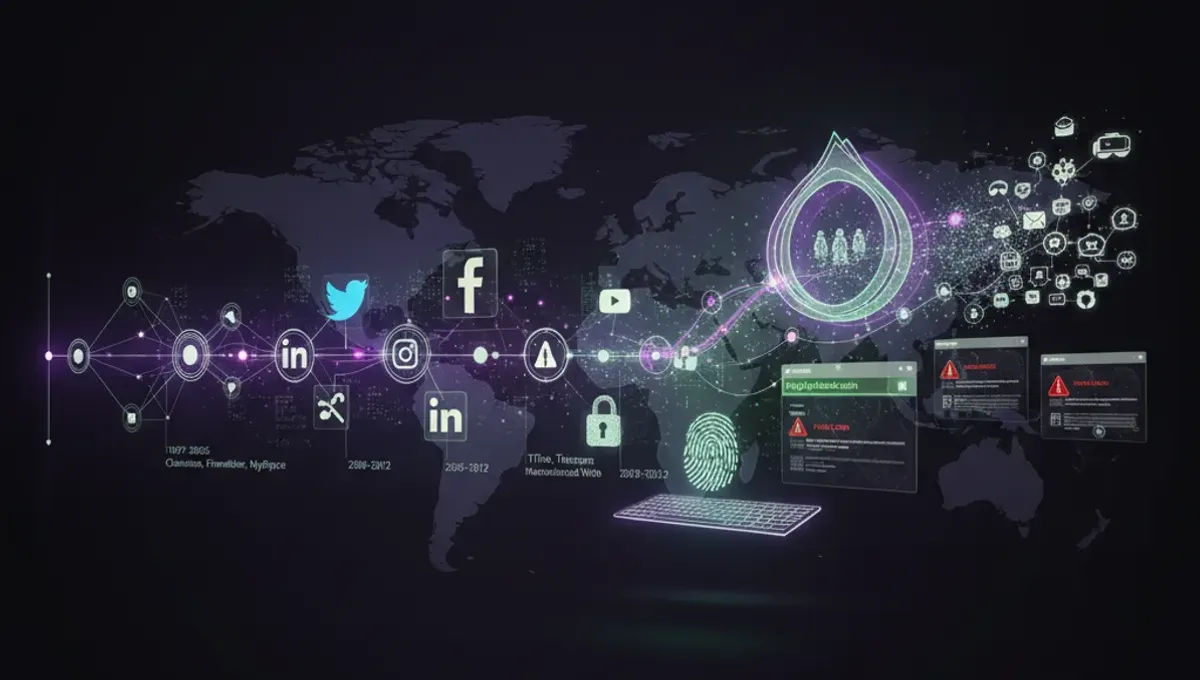
Before social media became mainstream, the internet relied on bulletin board systems where users connected through dial-up modems to share messages and files. These systems operated on a centralized model where one person hosted the server. Six Degrees, launched in 1997, marked the first recognizable social network, named after the six degrees of separation concept. It allowed users to create profiles, list their friends, and browse other users' friend lists. Though it shut down in 2001, Six Degrees established the foundational template that modern platforms still follow. Friendster emerged shortly after, gaining millions of users in Asia before declining as Facebook expanded globally. These pioneers proved that people wanted digital spaces to maintain relationships and discover new connections.
The Facebook Era and Desktop Dominance
Facebook's 2004 launch fundamentally altered social media by combining college networking with accessibility for all ages. Unlike Friendster's focus on dating, Facebook emphasized authentic identity and real-world connections. The platform introduced the News Feed in 2006, which automatically displayed friends' activities rather than requiring users to visit individual profiles. This algorithmic approach became the industry standard. Twitter launched in 2006 as a microblogging platform emphasizing public broadcasting over private networks, enabling real-time news sharing and public discourse. YouTube, acquired by Google in 2006, transformed video from a niche format into a primary content medium. These platforms dominated the desktop era, with users accessing them primarily through web browsers on computers. The evolution of social media marketing accelerated as businesses recognized these platforms' advertising potential.
Mobile Revolution and App-Based Platforms
The smartphone era fundamentally changed how people accessed social media. Instagram launched in 2010 as a mobile-first photo-sharing app, prioritizing visual content and simplicity over complex features. Snapchat introduced ephemeral messaging in 2011, appealing to younger users who valued privacy and casual sharing. TikTok emerged from Musical.ly in 2018, leveraging artificial intelligence to create personalized feeds that prioritized content discovery over follower networks. This shift from desktop to mobile meant platforms redesigned interfaces for smaller screens and touch interaction. Push notifications replaced email digests as the primary engagement tool. Mobile apps enabled location-based features, camera integration, and always-on connectivity that desktop versions couldn't match. The evolution of social media timeline shows a clear inflection point around 2012 when mobile usage surpassed desktop access. These platforms optimized for short attention spans and vertical video formats that dominated smartphone screens.
The Impact on Society and Communication Patterns
The evolution of social media and its impact on society extends far beyond entertainment. These platforms became primary news sources for millions, influencing political discourse and social movements. Real-time communication enabled during natural disasters and emergencies provided critical information when traditional media couldn't respond quickly. However, this same speed facilitated misinformation spread and echo chambers that reinforced existing beliefs. Social media altered how businesses communicate with customers, shifting from one-way advertising to two-way conversations. Mental health researchers documented correlations between heavy social media use and anxiety, depression, and sleep disruption, particularly among adolescents. The platforms' algorithmic content curation created filter bubbles where users primarily encountered viewpoints matching their existing preferences. Employment and education sectors adapted to social media's presence, with employers screening candidates' profiles and universities using platforms for recruitment and student engagement.
Algorithm-Driven Content and Personalization
Modern social media platforms rely on machine learning algorithms that analyze user behavior to predict content preferences. These systems moved beyond chronological feeds to algorithmic ranking, where engagement metrics determine visibility. Facebook's News Feed algorithm considers likes, comments, shares, and time spent viewing content to rank posts. TikTok's For You Page algorithm became legendary for its accuracy in predicting user interests within days of account creation. This personalization increased engagement but also created filter bubbles where users see predominantly similar content. The evolution of social media marketing adapted to these algorithms, with creators and businesses optimizing content for algorithmic distribution rather than audience size. Hashtags, posting times, and content formats evolved to maximize algorithmic visibility. Platforms introduced creator funds and monetization features that incentivized content production aligned with algorithmic preferences. This shift fundamentally changed what content gets amplified, often favoring sensational or emotionally provocative material over nuanced discussion.
Emerging Platforms and Decentralization Trends
Recent years show fragmentation as users spread across multiple platforms rather than consolidating on one dominant network. Discord emerged as a community platform for gaming but expanded into general communication. Mastodon and Bluesky represent decentralized alternatives to Twitter, allowing users to run their own servers while maintaining network interoperability. BeReal attempted to counter Instagram's curated aesthetic by requiring simultaneous photo uploads from front and back cameras. These newer platforms often emphasize privacy, user control, and reduced algorithmic manipulation compared to established networks. The evolution of social media continues as platforms experiment with features like Stories, Reels, and Threads to adapt to changing user preferences. Regulatory pressure from governments worldwide is pushing platforms toward transparency in algorithmic decision-making and data handling. The future likely involves multiple specialized platforms serving different purposes rather than one-size-fits-all networks dominating the landscape.
Privacy, Data, and the Future Landscape
Data privacy emerged as a central concern as social media platforms monetized user information through targeted advertising. Regulatory frameworks like GDPR in Europe and CCPA in California imposed restrictions on data collection and usage. Apple's iOS privacy changes in 2021 limited ad targeting capabilities, forcing platforms to develop alternative monetization strategies. Users increasingly question whether free services are worth the personal data required to access them. The evolution of social media marketing shifted as advertisers faced restrictions on behavioral targeting. Platforms began emphasizing first-party data collection and contextual advertising over third-party tracking. Younger users showed preference for platforms with stronger privacy protections, influencing platform design decisions. The future of social media likely involves greater user control over data, transparent algorithmic systems, and potential regulation mandating interoperability between platforms. Emerging technologies like blockchain and artificial intelligence will shape how platforms operate, though their ultimate impact remains uncertain.
Frequently asked questions
What was the first social media platform?
Six Degrees, launched in 1997, is widely recognized as the first social media platform. It allowed users to create profiles, list friends, and browse other users' connections. Named after the six degrees of separation concept, it established the template that modern platforms follow, though it shut down in 2001 before Facebook's dominance.
How did mobile devices change social media?
Mobile devices transformed social media from desktop-based browsing to always-on, location-aware experiences. Platforms redesigned for smaller screens, introduced push notifications, and enabled camera integration. Instagram and Snapchat emerged as mobile-first apps, prioritizing visual content and vertical formats that desktop versions couldn't match effectively.
What impact has social media had on society?
Social media became primary news sources, enabling real-time information sharing during emergencies but also facilitating misinformation spread. It altered business communication, influenced political discourse, and created new employment opportunities. However, research correlates heavy usage with mental health concerns, particularly among adolescents experiencing anxiety and sleep disruption.
How do algorithms shape modern social media?
Algorithms rank content based on engagement metrics rather than chronological order, personalizing feeds to predict user preferences. This increased engagement but created filter bubbles limiting exposure to diverse viewpoints. Creators optimize content for algorithmic distribution, often favoring sensational material over nuanced discussion.
Are decentralized social media platforms the future?
Decentralized platforms like Mastodon and Bluesky offer alternatives emphasizing user control and privacy. However, network effects favor established platforms with larger user bases. The future likely involves multiple specialized platforms rather than one dominant network, with regulatory pressure pushing toward transparency and user data protection.